


Technology has always brought both hope and worry about impact on employment. The growth of automation and AI is keeping this debate alive. It’s about how work changes.
Today, many workers worry like the 19th-century Luddites did. They fear machines and AI might take their jobs. This fear is real, as advanced robots and AI systems could replace humans in many fields.
But technology also brings new chances. When we work more efficiently, we buy more. This leads to new job categories and industries that didn’t exist before.
This piece looks at the two sides of innovation’s effect on labour market trends. We’ll see how automation changes old jobs and opens up new ones for the future.
The Historical Evolution of Technology’s Impact on Employment
To grasp how technology changes work, we must look at history. The link between new tech and jobs has always followed a pattern. This pattern includes disruption and then adapting to the new.
From Industrial Revolution to Digital Age
Mechanisation’s initial labour market disruptions
The Industrial Revolution was the first big change in technology. Machines took over jobs of skilled workers, causing worry about losing jobs forever. The Luddite movement in the early 1800s showed this fear by destroying machines.
But, machines also brought new jobs in factories and maintenance. This change was hard but led to more productivity and new jobs.
Computerisation and its employment consequences
The computer era started in the mid-20th century. Computers did complex tasks that humans used to do. Word processors changed secretarial work, and databases changed how we keep records.
Offices changed a lot as tech took over simple tasks. This change caused some job loss but also created new tech and analytical jobs.
Related Posts:
- What Is Construction Technology and Management…

- How Technology Affects Ethics New Moral Dilemmas in…

- What Would Happen If Technology Didn't Exist A World…

- How Technology Can Increase or Decrease Environmental Impact

- How Does Laser Technology Work Light Amplification Explained

- Is a Watch a Technology The Evolution of Timekeeping

Patterns of Technological Displacement Throughout History
Consistent cycles of job elimination and creation
History shows that new tech first leads to job loss, then to new jobs. Studies say job loss from tech usually lasts about two years before new jobs appear.
A key fact is that 60% of current US workers have jobs that didn’t exist in 1940. This shows how tech can create new jobs, even as it replaces old ones.
Historical precedents for current automation trends
Today’s worries about AI and robots are similar to past fears. Each big tech change has caused worries about losing jobs. But, history shows that tech usually creates as many jobs as it takes away.
These job displacement cycles have been the same for centuries. As seen in analysis of tech’s impact on jobs, today’s automation follows the same patterns as before.
Looking back helps us understand today’s tech changes. The pace of change may be faster, but the basic pattern of innovation, job loss, and new jobs stays the same.
How Does Technology Affect the Labour Market Through Automation
Modern automation is changing how work is done in many industries. It combines physical robots with smart software that can learn and adapt. This mix brings both chances and challenges for workers and companies.
Current Automation Technologies Reshaping Industries
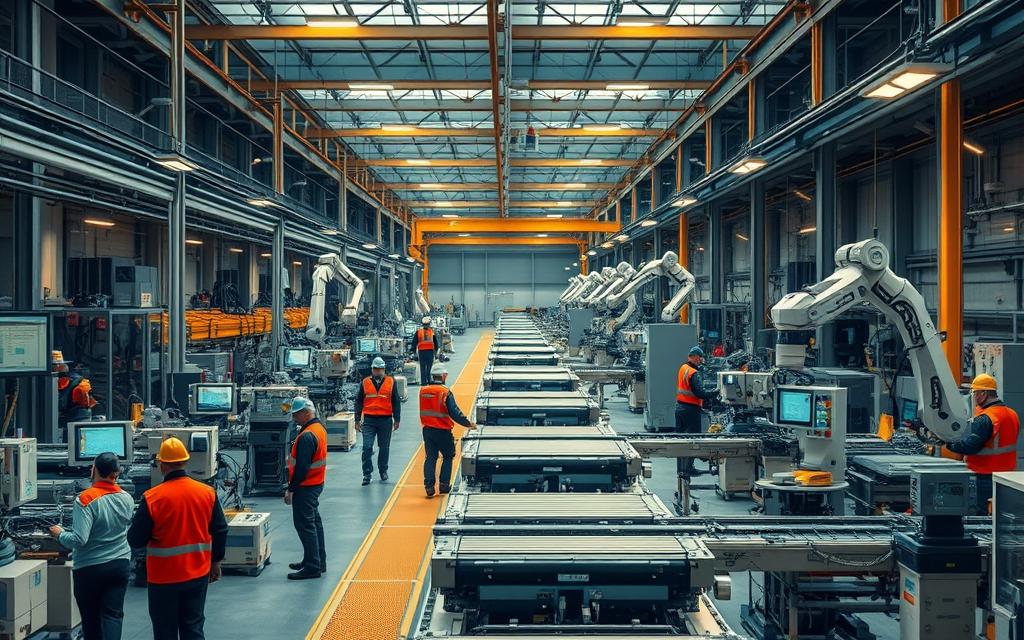
Automation technologies are changing workplaces fast. These include physical robots and smart software that can do complex tasks.
Robotic process automation in manufacturing
Manufacturing now uses advanced robots for tasks like assembly and quality control. These robots work with humans, taking over tasks that are repetitive and hard.
Automotive plants use robots for welding and painting. These robots are more precise than humans. They also use sensors and IoT technology to work with little human help.
Artificial intelligence in service sectors
Service industries use AI to automate tasks that humans used to do. Banks use AI for fraud detection and risk assessment. Legal firms use AI for document review and case research.
AI has changed customer service a lot. Interactive voice response systems and chatbots handle routine questions. They work all the time, saving businesses money.
Sectors Most Vulnerable to Automation Displacement
Some industries are more at risk of being replaced by automation. Jobs that involve doing the same thing over and over are most likely to be automated.
Routine manual labour positions at highest risk
Jobs on assembly lines, in warehouses, and in food service are at risk. These jobs are often physical and follow a set pattern. Self-checkout machines in stores are a clear example.
Jobs in transportation and logistics are also at risk. Automated vehicles in warehouses and self-driving cars threaten many jobs. These jobs are often physical and can be easily done by robots.
Middle-skill administrative roles facing automation
Jobs like data entry, scheduling, and basic accounting are under pressure from automation. Software can now do these tasks better than humans. This affects jobs in many fields, from healthcare to business.
These jobs have traditionally offered stable work for those without degrees. Their automation is making the labour market more polarised, with jobs at the high and low ends of the spectrum.
Economic Implications of Widespread Automation
Automation is having big effects on the economy. It changes how work is done, affects jobs, and impacts wages.
Productivity gains versus employment concerns
Businesses using automation see big gains in productivity. Studies show AI can improve labour productivity by about 15%. This is because tasks are done faster, with fewer mistakes, and without breaks.
But, these gains raise concerns about jobs. It’s estimated that 6-7% of jobs could be lost to automation. The impact varies by industry and job type.
Wage polarisation effects across skill levels
Automation is widening the gap in wages between different skill levels. Workers who work with technology often earn more. Those in jobs that can be automated may see their wages stay the same or even drop.
This gap has been growing for decades. High-skilled workers who work with technology earn more. But, workers in jobs that can be automated face more competition from machines.
| Skill Level | Automation Impact | Wage Trend | Example Roles |
|---|---|---|---|
| High-Skill | Technology complement | Strong growth | Data scientists, AI specialists |
| Middle-Skill | Displacement risk | Stagnation/decline | Administrative assistants, factory workers |
| Low-Skill | Limited automation | Moderate growth | Personal care, creative roles |
The table shows how automation affects different skill levels differently. This uneven impact creates challenges for workforce development and economic policy. Anyone researching affects labor market may also want to understand laser work light amplification before deciding on the best option. Understanding these patterns helps businesses and workers prepare for the changing labour market.
Emerging Job Categories Created by Technological Advancement
Automation changes old jobs, but it also brings new ones. These new jobs are in many different fields. They show how new ideas lead to special jobs that meet new needs.
Digital Economy Roles and Specialisations
The digital world has created new jobs that didn’t exist before. These jobs are some of the most wanted new technology jobs today.
Data science and analytics positions
Now, companies use big data to make decisions. Data scientists turn this data into useful information. They use advanced math and computer learning.
They get high pay because they know both tech and business. They help companies work better, predict what will happen, and make customer experiences better.
Cybersecurity and privacy protection roles
With more digital stuff, keeping data safe is key. Cybersecurity experts make strong defence systems against threats.
They set up security, check for weak spots, and fix problems. They protect everything from personal info to national security.
Technology-Enabled Traditional Sector Jobs
Even old industries change with new tech. Old jobs change, and new ones appear.
Digital marketing and e-commerce specialists
Marketing people now need to know about digital stuff too. They use tools like analytics and social media to reach people.
E-commerce experts make online shopping better and easier. They help mix old retail with new online shopping.
Healthcare technology integration roles
Doctors and tech experts work together to improve care. They use tech to help patients.
They keep up medical tech, like imaging and surgery systems. Their skills make sure tech helps, not hinders, healthcare.
Future-Oriented Occupations on the Horizon
Some new fields will shape the future of work. These future occupations deal with tech and its impact on society.
Artificial intelligence ethics and governance
As AI gets smarter, thinking about ethics is more important. People in this field make sure AI is used right.
They look at bias, being clear, and being fair in AI choices. Their work makes sure AI helps people.
Renewable energy technology specialists
Switching to green energy creates new jobs. These jobs involve working with solar, wind, and other green systems.
They mix electrical engineering with knowing about the environment. Their work helps tech and nature.
As one expert says:
“The best jobs will mix tech skills with things machines can’t do.”
This growing world of new technology jobs shows tech’s good side for jobs. While some jobs go away, many new ones come. These often need more skills and pay better.
Skills Transformation and Workforce Adaptation Strategies
Technological changes need new strategies for digital skills in all jobs. Both workers and companies must keep learning and improving. This effort involves schools, businesses, and governments working together.

Essential Digital Competencies for Modern Employment
Today’s jobs need new skills that go beyond old ones. These digital skills are key for success in many fields.
Technical literacy requirements across sectors
Digital skills are now a must-have. Workers need to know cloud tools, cybersecurity, and specific software. Even non-tech jobs need to understand how tech fits into their work.
Workers should be able to fix common tech problems and adapt to new digital tools. This basic skill lets them use the digital tools common in all industries.
Data analysis and interpretation skills
Data skills are very valuable today. People in all departments should know how to read and use data. This includes basic stats, making charts, and checking data sources.
Being able to turn data into useful information is key in marketing, operations, and customer service.
Educational and Training Programme Evolution
Education needs to change to meet today’s job market. Vocational and higher education should focus on skills for the future.
Vocational training adapting to technological demands
Vocational training now includes more digital skills. Even traditional trades teach smart tools, digital measuring, and design software.
These programs teach important skills like communication, analysis, and problem-solving. This tech training helps graduates compete in automated industries.
Higher education curriculum modernisation
Universities are changing to focus on critical thinking. STEM subjects already include tech training, but humanities and social sciences now include data and digital skills.
This change aims to develop skills like thinking, socialising, and emotional intelligence. It prepares students for jobs that need both tech skills and human insight.
Corporate Reskilling and Upskilling Initiatives
Companies play a big role in training workers. Investing in employee skills is good for business and society.
Workplace learning and development programmes
Good companies offer training in both tech and soft skills. Their programs include:
- Digital literacy certification courses
- Data analytics training modules
- Leadership development programmes
- Technology-specific skill building
Many companies reward employees for learning new skills. They see investing in people as a way to stay ahead.
Public-private partnership training models
Government, schools, and companies work together to train workers. They focus on areas where skills are needed most.
These partnerships offer training with government help. They encourage employers to retrain workers. Nonprofits also help by training vulnerable workers.
The table below shows how different training models work:
| Training Model | Primary Focus | Typical Duration | Key Stakeholders |
|---|---|---|---|
| Corporate Upskilling | Role-specific technical skills | 3-6 months | Employers, employees |
| Vocational Retraining | Industry transition skills | 6-12 months | Educational institutions, industry groups |
| Public-Prnership Programmes | Broad digital competencies | 12-24 months | Government, employers, educational bodies |
| Nonprofit Initiatives | Vulnerable worker populations | Variable | Community organisations, donors |
Working together, we can make the workforce more adaptable. This ensures training meets real industry needs and reaches more people.
Conclusion
Technology has a mixed effect on jobs. It takes away some jobs but also brings new ones. This is how the job market is changing today.
Our look at technology and work shows it’s all about change, not just job loss. Big companies like Amazon and Tesla show how tech makes work more efficient. They need people with new skills, making old jobs different.
To do well, we need to work together. Schools must update what they teach. Companies should help workers learn new things. Governments should help people move to new jobs when technology changes.
The future of work looks good if we’re ready. By getting better at using technology and helping workers learn, we can all do well. How we handle this change will shape our economy for years to come.