

Is a Watch Technology? How Timekeeping Became Tech
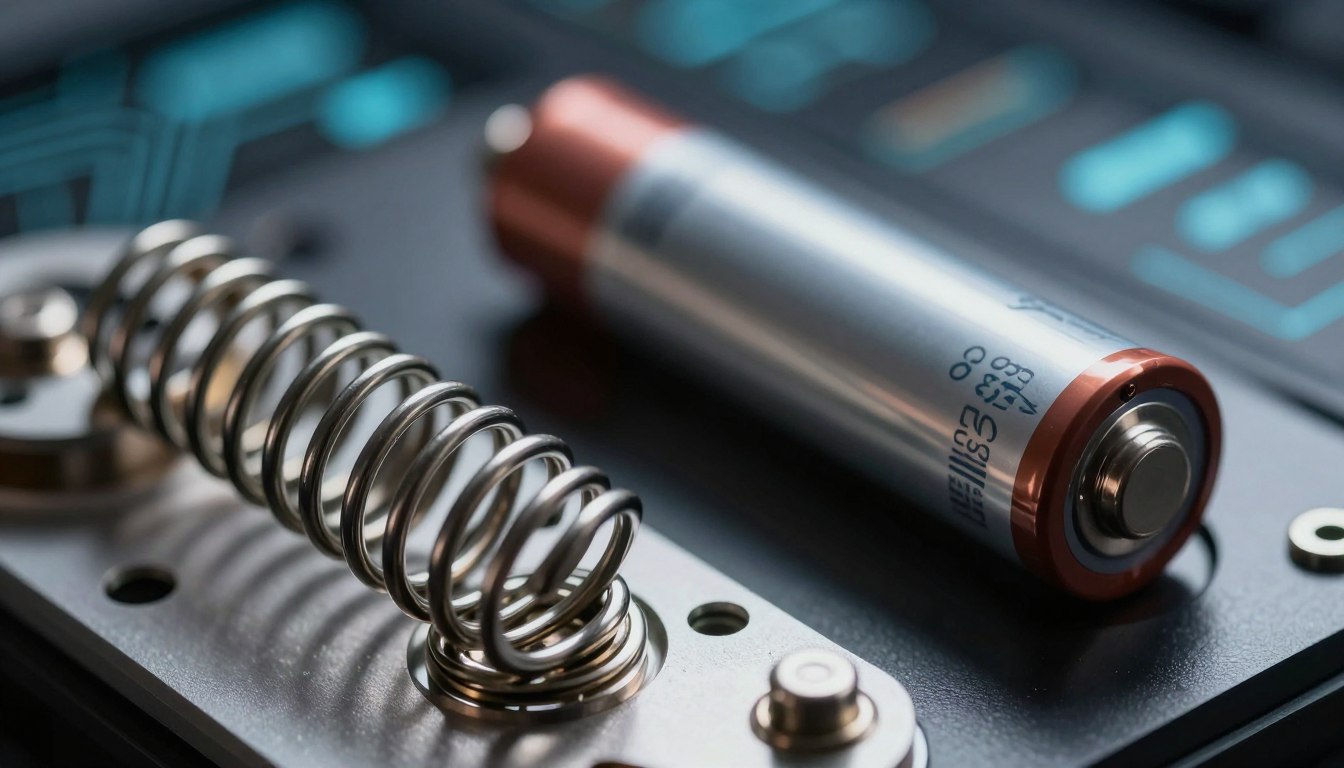
A watch is technology whether its energy comes from a wound spring, a battery, or a rechargeable cell. If you are choosing a timepiece, that difference matters: its power source and design shape what it can do, how you use it, and how often it needs attention.
Timekeeping has changed across centuries, from early clocks to mechanical and quartz watches, then to connected devices. The form has changed, too, but innovation has never depended only on screens or apps. You can understand the future of watches more clearly by looking at the practical problem each design solves.
Key Takeaways
- Timekeeping technology includes mechanical engineering and electronics.
- A screen or internet connection is not required.
- Power sources shape how watches work and need care.
- Connected watches add functions beyond displaying time.
- The useful test is how a device measures and displays time, not whether it looks traditional or digital.
Is a Watch Technology?
A watch counts as technology when an engineered system measures and displays time, whether or not it has a digital screen. Technology applies knowledge and design to solve a practical problem, and timekeeping is one such problem. A watch can be technologically significant without being digital.
A watch’s technology lies in how its design measures and displays time, not in whether it has a screen.
An escapement is a mechanism that releases energy from a watch’s gear train in controlled increments. Hamilton Electric introduced a battery-powered watch in 1957. Seiko released the Astron on Christmas Day 1969 as the first commercial quartz watch, advertised as 100 times more accurate than mechanical rivals.
- Mechanical watch technology uses stored spring energy.
- Quartz watch technology uses an electronic timekeeping system.
- Connected watch technology adds software and wireless functions.
A watch technology book is most useful when it explains how movements regulate energy, rather than merely listing brands. A traditional-looking dial can still be the visible face of highly engineered timekeeping.
How Did People Tell Time Before Wristwatches?
A shadow clock could mark the day, but it could not keep working when sunlight disappeared. People used different devices to track time, including water and weights. The shift to weights and gears made clocks less dependent on the sky.

Related Posts:
- Is a Watch a Technology The Evolution of Timekeeping
- How to Survive Without Technology A Guide to Unplugging

- How Technology Can Increase or Decrease Environmental Impact

- What Is Construction Technology and Management…

- How Technology Affects the Labor Market Automation…

- How Technology Affects Ethics New Moral Dilemmas in…

| Timekeeping device | Date and place | How it marked or measured time |
|---|---|---|
| Sundial | Around 1300 BC, Egypt | A shadow moved across marked positions |
| Su Song’s water clock | 1088, Henan province, China | Controlled water flow drove an escapement and gears |
| Mechanical clock | 14th-century Europe | Descending weights powered gears |
The sundial was found in a worker’s hut in the Valley of the Kings. A sundial needs sunlight, while a water clock can work without it. Su Song’s clock used an escapement to check and release power from gear wheels in turn.
What Made Portable Watches More Accurate?
A coiled mainspring let a clock carry its stored energy instead of depending on a hanging weight. The spring made portable timekeeping possible, while improved regulation helped control its errors. A pocket watch became more useful as regulation reduced the size of its timekeeping errors.
Mainsprings Made Clocks Portable
The mainspring appeared in the 15th century. Unlike a tower clock’s descending weight, it stored energy in a compact coil. That change enabled small clocks and, later, pocket watches that people could carry.
The first watches were small clocks portable enough to carry, dating to the turn of the 16th century. They were not all practical pocket watches as people know them today. Early examples were often bulky, and their timekeeping could vary considerably.
Balance Springs Improved Timekeeping
A balance wheel helped regulate the energy moving through a watch. The balance spring worked with that wheel, allowing it to swing at a steady rate. Together with the escapement, these parts controlled how quickly the gear train advanced.
Watchmakers refined the system over time. A balance wheel appeared in the 17th century, and lever escapements developed during the 18th and 19th centuries. These changes made mechanical watches more reliable and easier to use.
Jewel bearings were added in 1702 to reduce friction where moving parts met. In 1766, watchmakers developed balance wheels that compensated for temperature changes. Temperature can affect a watch’s materials and timing, so this refinement helped reduce variation.
The history of mechanical watches is a story of making stored energy portable, then improving its control. Each refinement addressed a real weakness, from friction to temperature. A pocket watch became more useful as regulation reduced the size of its timekeeping errors.
Who Invented the First Wristwatch?
Abraham-Louis Breguet is usually credited with the earliest documented wristwatch, designed for Queen Caroline Murat in 1810. Records say it was delivered in 1812 as No. 2639. The “first wristwatch” label is disputed, but Breguet’s earlier documented design has a strong claim.
Breguet’s Earlier Watch for Queen Caroline Murat
Breguet’s No. 2639 wristwatch had an oval case, a silver dial, and curved Arabic numerals. It also had a chiming repeater, a feature that sounded the time. Its wristlet used hairs and golden threads, an unusual design for a watch worn on the wrist.
The watch is now lost, which adds uncertainty to the historical record. Robert Dudley presented Queen Elizabeth I with a possible “arm watch” precursor in 1571. That early reference is intriguing, but it does not prove the object was a modern wristwatch.
Patek Philippe and the Wristwatch’s Wider Adoption
Guinness World Records credits Patek Philippe with an ornate gold wristwatch made for Countess Koscowicz of Hungary in 1868. The watch is now in Patek Philippe’s Geneva museum. The company describes it as the “first Swiss wristwatch,” while many watch historians credit Breguet with the earlier wristwatch.
Those claims can coexist: one concerns an earlier documented wristwatch, the other a Swiss-made example. A design’s place in watch history can depend on how the object is described and documented.
In 1904, Cartier designed the Santos-Dumont for aviator Alberto Santos-Dumont. He needed to read the time while flying, without taking a pocket watch from his clothing. Cartier began selling the design commercially in 1911, connecting its form with practical use for a male aviator.
The Cartier Santos-Dumont shows how a wristwatch could become a practical tool as well as a personal timepiece.
How Do Mechanical, Automatic, and Quartz Watches Differ?
A mechanical watch stores energy in a spring, while a quartz watch uses an electronic oscillator to regulate time. Automatic describes how a mechanical watch is wound, not a separate movement family. Quartz watches are generally more accurate and need less maintenance than mechanical watches.
Mechanical Watches Store and Regulate Energy
A mechanical watch stores energy in a wound mainspring. The spring turns a gear train, while the escapement and balance wheel regulate that energy into ticks. A manual mechanical watch needs winding by hand to keep running.
Depending on the model, mechanical watches described here have power reserves of 26-72 hours. Typical accuracy is about -20 to +20 seconds per day for everyday models. Better-regulated Swiss or Japanese movements are about -10 to +10 seconds daily, while a COSC-certified chronometer is -4 to +6 seconds.
Automatic and Quartz Watches Reduce Daily Work
An automatic watch uses a wrist-motion-powered rotor to wind its mainspring. Most can also be wound by hand at the crown. Abraham-Louis Perrelet is often credited with an early self-winding pocket watch in the 1770s, though he is not an uncontested inventor.
- Movement type: mechanical or quartz.
- Winding method: manual winding or automatic winding.
- Display style: analog hands or digital display.
Quartz watches use a battery and an electronic oscillator. Quartz crystals commonly vibrate at 32,768 Hz, giving the watch a steady timekeeping signal. Mechanical watches typically need service every 3-7 years, depending on use and brand.
A first automatic watch is often linked to Perrelet’s work in the 1770s, but the credit is not settled. Choose manual or automatic based on whether you prefer winding by hand or wrist motion. If low maintenance and accuracy matter most, quartz is usually the more practical choice.
What Can a Smartwatch Do Beyond Telling Time?
A smartwatch extends timekeeping with software, sensors, and wireless connections that can track activity or relay information. Connected features can be useful, but they depend on the model and its battery. Smartwatch alerts can support awareness, but they do not replace medical care.

Health Sensors Add Personal Tracking
Smartwatches combine computer chips, sensors, wireless connections, and apps. Their functions can include:
- Health tracking for activity and body signals.
- Notifications and communication from a connected phone.
- GPS navigation for routes and location.
- Emergency connectivity when ordinary mobile service is unavailable.
In 2026, Apple Watch Series 11 costs $399 at Best Buy and has FDA-cleared hypertension alerts and 5G. Its screen is described as 2x more scratch-resistant. CNET Labs gave it the most accurate heart-rate monitor award on February 17, 2026, and its normal-use battery life is 24-29 hours.
Connectivity Adds Navigation and Safety Tools
The Google Pixel Watch 4 has emergency satellite connectivity and dual-band GPS. It can reach 50% charge in less than 15 minutes. The Apple Watch SE 3 is listed at $249 at Amazon, with 5G on its cellular model.
| 2026 model | Battery or charging fact | Distinguishing feature |
|---|---|---|
| Apple Watch Series 11 | 24-29 hours, normal use | 5G and hypertension alerts |
| Google Pixel Watch 4 | 50% charge in under 15 minutes | Emergency satellite connectivity |
| OnePlus Watch 3 | Five-day battery life | Three years of software and security updates |
| Samsung Galaxy Watch 8 Classic | 47 mm, one size | Rotating bezel |
| Apple Watch SE 3 | Battery life not stated | 5G on cellular model |
Other choices include the $80 Amazfit Bip 6, which offers a week of battery life with heavy use, and the $799 Apple Watch Ultra 3, which has satellite connectivity and lasts two days per charge. The Garmin Venu 4 lasts a week in smartwatch mode.
The Garmin Fenix 8 Pro has satellite messaging, location sharing, and emergency SOS outside mobile range, with a subscription required. In smartwatch mode, battery life reaches 15 days for the 47 mm size or 27 days for the 51 mm size. GPS mode lasts 44 hours for the 47 mm model. Compare a smartwatch’s real battery life and connectivity needs with the features you will actually use.
How Do Solar and Outdoor Watches Extend Watch Technology?
A solar watch can turn available light into stored energy, while an outdoor watch can add protection and navigation tools. Useful design matters more than a label or price. Choose case protection, visibility, and tools for the activity you actually plan to do.
A strong water-resistance rating alone does not establish suitability for every activity.
Solar Cells Turn Light Into Running Time
Solar cells capture light and use it to power a watch movement. The Victorinox Concept One Solar watch uses a Swiss Made Ronda 215 solar movement and has up to 8 years of battery life. Its stainless steel case is 39 mm wide, 11 mm thick, and weighs 101 g.
It has 10 ATM/100 M/330 FT water resistance, a date display, luminous hands, and a fixed stainless steel bezel. Its tool-free interchangeable rubber strap system lets you change the look without tools. The movement also has double antishock protection and magnetic resistance.
Watches with personality can express it through their display, strap, case, or useful complications. The Concept One’s interchangeable strap gives you a concrete way to change its appearance while keeping the same movement.
Outdoor Watches Add Tools and Protection
In 2026, Outdoors Magic named the G-Shock Mudmaster GWG-B1000-1AER its toughest outdoor watch overall and listed it at £570. It uses solar quartz, can run for up to six months in total darkness, and has 200 m/20 ATM water resistance. Its tools include a compass, altimeter, barometer, and thermometer.
The Luminox Bear Grylls Survival Master Series is listed at £480, has 300 m/30 ATM water resistance, and uses T25 tritium-tube illumination. That depth rating differs from the Mudmaster’s, while the two watches use different lighting and outdoor tools. The Mudmaster’s toughness does not make it the best luxury watch.
- Water resistance: compare the rating with your intended activity.
- Low-light visibility: check whether the hands or display remain readable.
- Activity tools: choose a compass, altimeter, or other feature you will use.
How to Judge Thin Luxury Watches
Thin luxury watches and the best ultra-thin watches are easier to judge by fit and function than by a title. Check the case thickness against your sleeve and wrist, then identify the movement type. A thin case can limit the space available for components.
Ask how the movement can be serviced and whether local watchmakers can access it. Check for useful complications, such as a date display, rather than paying for features you will ignore. The Victorinox Concept One Solar watch measures 11 mm thick, a concrete reference point, not a category winner.
Choose the specifications that match your routine, since a strong water-resistance rating alone does not establish suitability for every activity.
Conclusion
A watch can be a small mechanical instrument, an accurate quartz timekeeper, or a connected device without changing its basic purpose. Watch technology includes traditional engineering and modern electronics, with each design aimed at solving a timekeeping or everyday-use problem.
Before choosing, compare the power source with the feature you care about most. A simple check can narrow your options: decide whether accuracy, low maintenance, outdoor capability, or connected features matters most to you.
FAQ
Which technology is used in smart watches?
Smartwatches use processors, sensors, software, and wireless connections to run apps and share information. GPS and cellular features depend on the model; some watches have GPS without cellular service, while cellular versions can connect without a nearby phone. Health tools can track activity or body signals, but alerts do not diagnose a condition or replace care from a medical professional.
Who invented the first wristwatch?
Abraham-Louis Breguet is usually credited with the earlier documented wristwatch, designed for Queen Caroline Murat in 1810 and delivered in 1812. It was recorded as No. 2639 and had a wristlet made with hairs and golden threads. Patek Philippe’s 1868 watch for Countess Koscowicz is described by the company as the “first Swiss wristwatch,” a different claim.
What is better, a mechanical or automatic watch?
An automatic watch is a type of mechanical watch, so the choice is usually between winding methods. An automatic uses wrist motion to wind its mainspring, while a manual mechanical watch needs winding by hand. Quartz is generally more accurate and needs less maintenance than either mechanical type. The more practical choice depends on whether winding or upkeep matters more to you.
What are the five main types of watches?
A practical five-type list is mechanical, automatic, quartz, digital, and smartwatch. Automatic watches are a subtype of mechanical watches, not a wholly separate movement family. Quartz watches use an electronic oscillator, while digital watches describe a display style. Smartwatches add software, sensors, and connections, and may show time with either digital displays or analog-style hands.
What are the two types of watches called?
Analog and digital are the two common display styles. Analog watches show time with hands moving around a dial, while digital watches show numerals on a screen. Those labels do not explain how the watch keeps time. Mechanical and quartz describe movement types, and either movement can be paired with different display designs.
What are other names for watches?
Timepiece is a general alternative name for a watch. Wristwatch describes one worn on the wrist, while pocket watch describes one carried in a pocket. These words tell you about the object or how someone carries it, not necessarily how it measures time. A timepiece can use mechanical, quartz, or connected technology.
What are the three main categories of watches?
A useful broad grouping is mechanical watches, quartz watches, and smartwatches. Mechanical watches use stored spring energy, quartz watches use an electronic oscillator, and smartwatches combine software with sensors and wireless connections. Digital is not a movement category; it describes how a watch displays information. A smartwatch can have a digital display, but its defining feature is its connected computing system.
What is an old fashioned watch called?
A watch carried in a pocket is called a pocket watch. “Vintage” and “antique” describe age or status, not a separate mechanism, so an older watch could still use a mechanical or quartz movement. If you mean an older-looking style rather than how it is carried, terms such as vintage describe its appearance or period.