


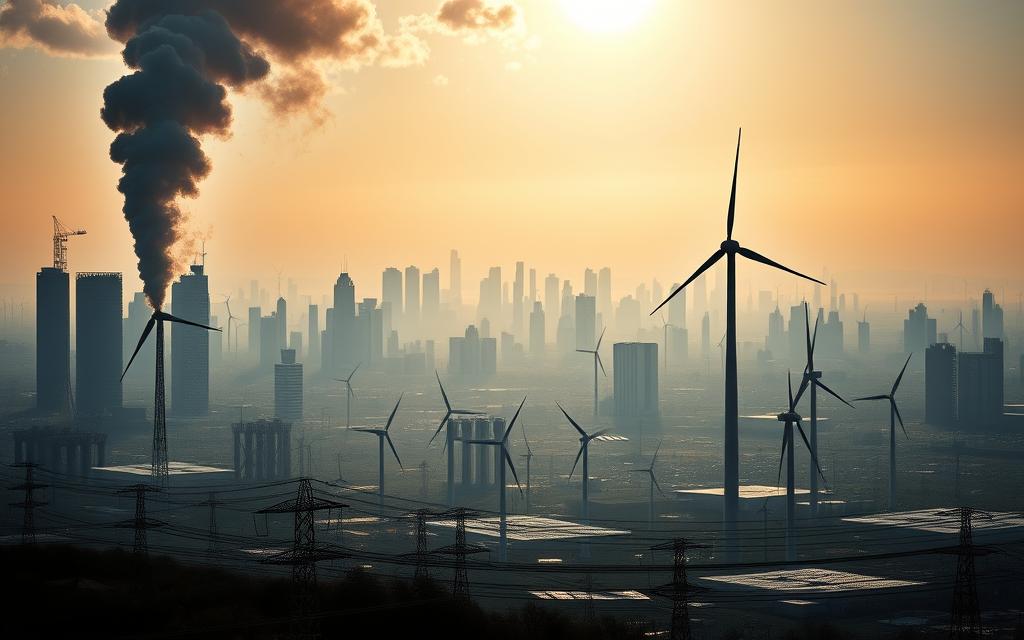
Our modern world faces a big question about technology. New inventions are changing our planet in big ways.
These new things have a double edge. They can either damage or protect our planet.
It all comes down to our choices. How we use these tools matters a lot.
Some tech creates big environmental problems. But others help us save the planet.
We need to look closely at this mix. Knowing both sides helps us make better choices for our future.
The Dual Nature of Technology’s Environmental Effects
Technology’s link with our environment is a complex issue that has changed a lot over time. New inventions aim to solve environmental problems but also create new ones. This is clear when we look at how technology has evolved over the years.
Historical Context of Technological Impact
The Industrial Revolution was a key moment in history of technology and its effects on the environment. It moved societies from farming to industrial ways, changing how we use natural resources.
Before the 18th century, our impact on the environment was mostly local. But the use of fossil fuels and mass production changed everything. Factories, railways, and cities grew fast.
Related Posts:
- How Technology Affects Ethics New Moral Dilemmas in…

- How Technology Affects the Labor Market Automation…

- What Is Construction Technology and Management…

- What Would Happen If Technology Didn't Exist A World…

- Is a Watch a Technology The Evolution of Timekeeping

- How to Survive Without Technology A Guide to Unplugging

This change brought good things like better living standards but also pollution. New inventions made more things but also used more resources and made more waste.
Research from the Brookings Institution shows technology’s double nature. The environmental impact of the Industrial Revolution sets a pattern that affects our development and sustainability today.
Modern Technological Paradigms
Today’s digital world brings new environmental challenges and chances. The move from old machines to new tech changes how we interact with the planet.
Now, we focus on digital things like cloud computing and connected devices. These changes how we work, talk, and use resources. They also bring new environmental issues.
Things like data centres and making electronic devices use a lot of energy. The tech world is responsible for 2-7% of global greenhouse gas emissions. This number is growing as we use more digital stuff.
But, these technologies also help us use resources better. The idea of digital age sustainability sees the good and bad sides of tech. It knows tech’s environmental costs but also its ability to solve ecological problems.
The Internet of Things helps us track energy use better. Artificial intelligence makes things more efficient. Cloud computing lets us work from anywhere, which can cut down on emissions. These advances show how tech can help and hinder environmental goals at the same time.
| Technological Era | Primary Environmental Challenges | Key Sustainability Opportunities | Energy Consumption Patterns |
|---|---|---|---|
| Industrial Revolution | Air pollution from coal, habitat destruction | Mass production efficiency | Centralised fossil fuel dependence |
| Digital Age | E-waste, data centre energy use | Precision resource management | Distributed renewable integration |
| Emerging Technologies | Rare earth mineral extraction | Circular economy models | Smart grid optimisation |
Knowing our history helps us understand today’s tech and environment. Each new tech era brings its own challenges and chances. By understanding these, we can make better choices for the future.
The shift from steam engines to server farms shows tech’s double nature. Looking back, we see that tech’s impact depends on how we use it, not the tech itself.
How Technology Increases Environmental Impact
Technological progress brings many benefits but also harms the environment. The digital world has left a big ecological mark. We need to act fast to reduce this impact.
Electronic Waste and Pollution
Fast-changing tech leads to a big e-waste problem worldwide. Old devices pile up, causing tech pollution everywhere. In 2022, global e-waste hit 57.4 million metric tonnes, with recycling rates very low.
Devices contain harmful materials like lead, mercury, and cadmium. If not disposed of right, these can pollute soil and water for years.
Case Study: Smartphone Manufacturing
The smartphone environmental cost is huge, not just when we use them. Making a smartphone needs lots of water and creates most of its carbon footprint during production.
Manufacturing digital tech uses 47% of the sector’s emissions worldwide. Getting rare earth minerals and precious metals harms habitats and depletes resources.

Energy Consumption in Data Centres
Data centres need a lot of energy to keep our digital world running. They work all the time, using lots of electricity for computing and cooling.
Data centres are very energy-hungry. They need a lot of power, often from non-green sources.
Carbon Footprint of Cloud Computing
Cloud services are convenient but harm the environment. Cloud computing emissions are a big part of the digital sector’s carbon footprint. Data centres cause 45% of the ICT sector’s emissions, which is 4% of global greenhouse gas emissions.
As we store and process more data, the environmental impact grows. The energy needed for server farms and cooling systems is a big carbon problem that users often overlook.
How Technology Decreases Environmental Impact
Technology has a dark side, but it also helps the planet. New tech is making a big difference in many areas. It’s changing how we make and use energy.
Renewable Energy Technologies
Switching to green energy is a big win for tech. Renewable energy tech is taking over, changing our energy world.
Studies show tech is helping us use less fossil fuels. This is thanks to better energy storage and smarter grids.
Solar tech has improved a lot. Now, solar panels can turn sunlight into electricity with up to 22% efficiency.
New materials and designs are making solar cheaper. This means more homes and businesses can use solar power.
Smart Grids and Energy Management
Technology is also making our energy use smarter. Smart grid technology is making power distribution better.
These systems watch energy use in real time. They help use more green energy and lose less power.
Benefits of Smart Meters in Homes
Smart meters help homes use less energy. They show how much energy you’re using in real time.
Studies say homes with smart meters use 3-5% less energy. This is because people use less when they know how much they’re using.
Energy management goes beyond smart meters. It includes systems that make buildings use energy more efficiently. This can save a lot of energy.
| Technology Type | Environmental Benefit | Adoption Rate | Cost Efficiency |
|---|---|---|---|
| Solar Photovoltaics | Reduces carbon emissions by 90% compared to fossil fuels | Growing 25% annually | Cost competitive with conventional energy |
| Smart Grid Systems | Reduces energy waste by 15-20% | 40% of utilities implementing | High initial investment, long-term savings |
| Energy Management Software | Reduces building energy use by 10-30% | Rapid adoption in commercial sector | Payback within 2-3 years |
| Advanced Wind Turbines | Zero emissions during operation | Steady growth in offshore installations | Most cost-effective renewable in many regions |
These tech solutions show how innovation can help the planet. They improve how we make and use energy, creating a positive cycle for the environment.
Key Technologies Driving Environmental Change
Technology has a big role in our environment, with some innovations making a big difference. These tools can either harm or help our planet, depending on how they are used.
Artificial Intelligence and Big Data
Artificial intelligence is a game-changer for protecting the environment. It uses machine learning to find patterns in big data that humans might miss.
In waste management, AI helps sort recyclables more accurately. It uses sensors and cameras to identify different materials. This boosts recycling rates and cuts down on contamination.
Big data sustainability projects track deforestation using satellite images. AI quickly spots changes in forest cover. This helps conservation groups fight illegal logging.
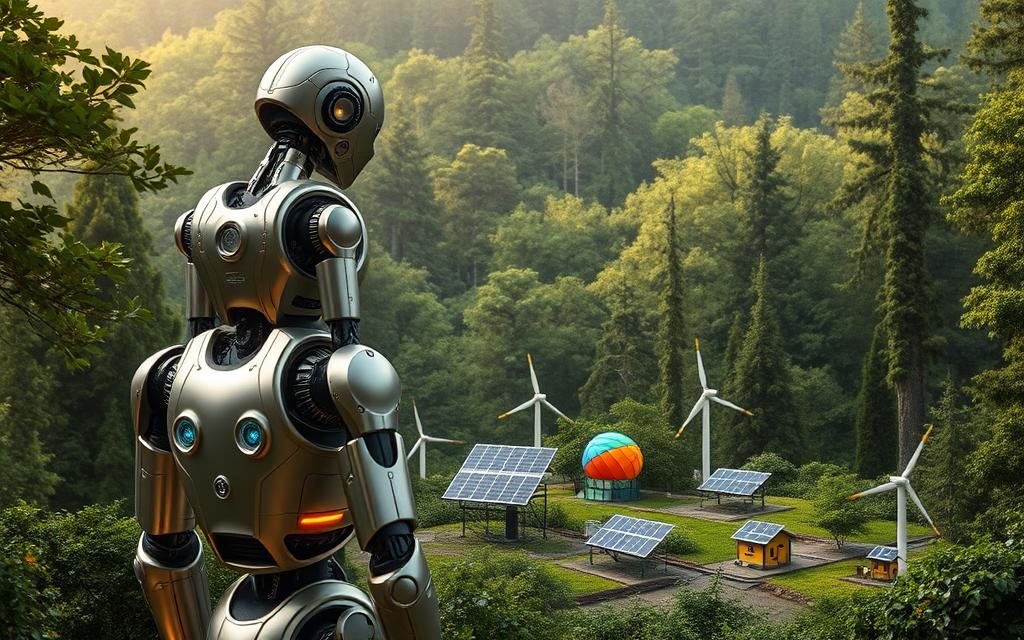
Renewable energy grids get a big boost from AI. It predicts energy output from solar and wind sources better than old methods. This makes energy use more efficient.
AI also optimises delivery routes in logistics. It cuts down fuel use and emissions. Companies save money and reduce their environmental impact.
Electric Vehicles: A Mixed Bag
Electric vehicles offer both hope and challenges for the environment. They have zero emissions, which improves air quality in cities.
But, a full lifecycle analysis shows a more complex picture. Making electric vehicles is carbon-intensive. The process creates a lot of emissions before the car hits the road.
Battery production is a big environmental worry. Electric cars need lithium, cobalt, and rare metals. Mining these materials harms landscapes and water systems and adds to carbon emissions.
Resource extraction has big impacts on the environment. It damages landscapes, harms water systems, and increases carbon emissions. These factors are key to understanding electric vehicles’ true environmental impact.
As one analysis notes:
“The production of smartphones, for example, is a significant contributor to carbon dioxide emissions… The materials required for these devices, such as lithium, neodymium, and antimony, are scarce and contribute to the carbon footprint during mining and manufacturing.”
This challenge is also true for electric vehicle batteries. They use large amounts of scarce materials. This has environmental costs beyond just carbon emissions.
- Water consumption in mining regions
- Habitat destruction at extraction sites
- Social impacts on local communities
Despite these challenges, electric vehicles are better for the environment over their whole life. This is true, mainly in areas with clean energy grids. The technology keeps getting better with each new generation.
Battery recycling and new battery chemistries are being explored. These aim to reduce material scarcity and lower environmental costs.
The environmental value of electric vehicles depends on many factors. These include how the electricity is made and how the cars are used. With careful manufacturing and clean energy, their benefits are clear.
Sector-Specific Impacts of Technology
Technology affects the environment in many ways, but some sectors see big changes. Agriculture and transportation are leading the way with new tech.
Agriculture: Precision Farming
Modern farming has changed a lot thanks to precision agriculture. This method uses farming technology to use resources better and protect the environment.
GPS, IoT sensors, and data help farmers use water, fertilisers, and pesticides wisely. This approach has many benefits:
- Less chemicals in waterways
- Less water used in farming
- Less fuel used in farming
- Healthier soil from less tilling
Modern farming technology lets farmers check on crops and soil in real time. They can fix problems fast, not just treat the whole field.
Transportation: Logistics Optimisation
The transport sector has seen big changes with new transport optimisation systems. These systems help reduce the environmental impact of moving goods and people.
Advanced algorithms plan routes very efficiently. This sustainable logistics considers many things:
- Current traffic and weather
- Vehicle capacity and fuel use
- Delivery times and priorities
These systems cut down on idle time and unnecessary travel. This leads to less fuel use, lower emissions, and less traffic.
Industry experts say using tech to work from home and optimising industrial processes also help. These steps reduce environmental impact and save energy.
Combining remote work with transport optimisation is a big win for the environment. It shows how tech can solve big problems while keeping the economy strong.
These examples show how specific tech can tackle big environmental issues. The future of precision agriculture and sustainable logistics looks very promising for a greener economy.
How Can Technology Either Increase or Decrease Environmental Impact
The impact of technology on the environment depends on how it is governed and the ethics of companies. Technology is advancing fast, but its effects on the environment are not set in stone. The same technology can harm the environment or help it.
Policy and Regulatory Influences
Government actions are key in making technology more sustainable. Good environmental policy for tech sets limits for innovation and protects our resources.
Tech industry regulations cover important areas like emissions, energy use, and waste. These rules make companies think about the whole life of their products.
We must protect shared resources like oceans, fresh water, and air. This requires careful planning and rules for technology.
Smart policies create markets for green tech with incentives and standards. They also make companies take responsibility for their environmental impact.

Corporate Responsibility and Green Tech
Businesses also play a big role in technology’s environmental impact. True corporate sustainability goes beyond just following rules. It means actively caring for the environment.
Most companies are not doing enough to be green. Only 6% of organisations have a strong, sustainable IT strategy. This shows there’s a lot of room for improvement.
Managing electronic waste is a big issue. Studies show 89% of organisations recycle less than 10% of their IT hardware. This is a chance to use the circular economy.
Investing in green technology can turn these problems into chances. Companies that focus on sustainability often do better in many ways. They save money, build trust with customers, lead in new markets, and manage risks better.
Now, more companies are making sustainability a key part of their business. They see that caring for the environment and doing well financially go hand in hand.
Conclusion
Technology plays a key role in our planet’s health, with both positive and negative effects. The technology environment future depends on our choices today. We must guide innovation towards preserving our planet, not harming it.
Despite challenges like electronic waste and energy use, new technologies offer hope. Advances in renewable energy, artificial intelligence, and smart systems are sustainable tech solutions. They can cut emissions, use resources wisely, and protect nature, showing technology’s good side.
To balance tech and ecology, we all need to work together. We must aim for sustainable development, focusing on policies, corporate responsibility, and raising awareness. By choosing responsible innovation, technology can help protect our planet for future generations.
FAQ
Is technology inherently good or bad for the environment?
Technology itself isn’t inherently good or bad. Its impact depends on how it’s developed and used. It can harm the environment or help protect it.
How has technology historically affected the environment?
Technology has had big effects on the environment, starting with the Industrial Revolution. It led to more pollution and resource use. Today, digitalisation brings new challenges but also chances for sustainability.
What are the main environmental problems caused by technology?
Big issues include electronic waste and the energy use of data centres. These contribute to pollution and carbon emissions.
How does technology help reduce environmental impact?
Technology helps through innovations like renewable energy and smart grids. Smart meters let people track and cut energy use.
Can artificial intelligence and big data benefit the environment?
Yes, AI and big data help in many ways. They improve renewable energy, sort waste better, and track deforestation. They also make logistics more efficient.
What is the environmental impact of electric vehicles?
Electric vehicles cut down on emissions while being used. But, making them and mining for battery materials can harm the environment.
How is technology used in agriculture to support sustainability?
Precision farming uses GPS and sensors to use resources better. This cuts down pollution and saves resources, boosting yields.
What role do policy and corporate responsibility play in technology’s environmental impact?
Policies on emissions and recycling are key. Companies must invest in green tech and report their actions. This leads to better environmental outcomes.
How can technology be managed to ensure a positive environmental impact?
For a positive impact, focus on sustainable development and strong policies. Companies must be accountable and innovate for environmental protection.
