

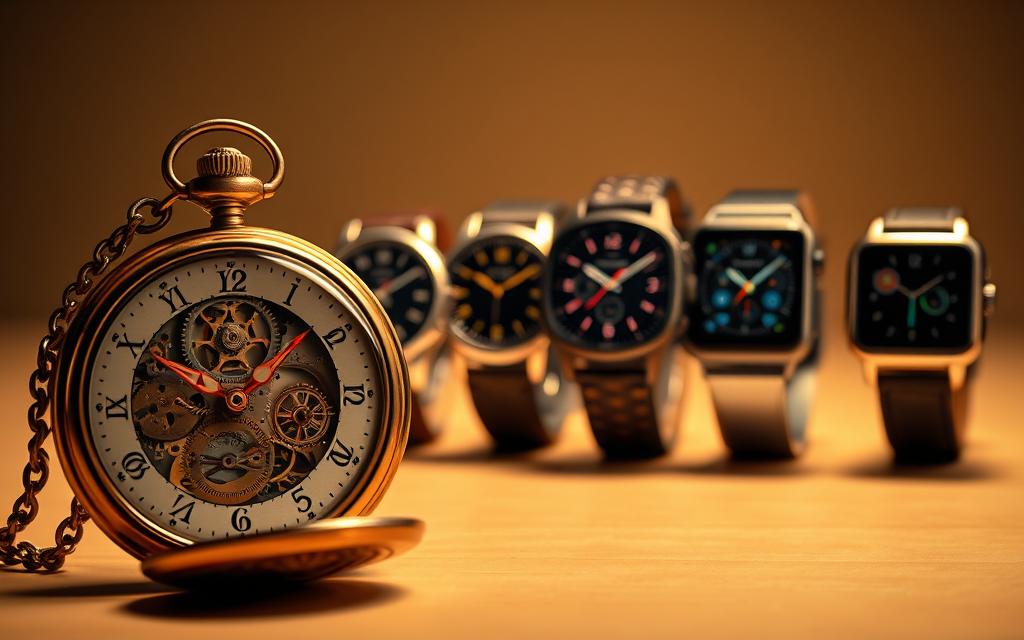
Our history with time has led to amazing inventions. From watching the stars to using precise tools, we’ve always tried to measure time better. This shows how technology has grown over time.
Long ago, people used sundials and water clocks to tell time. These early tools were the start of our journey in timekeeping evolution. They led to the watches we know today.
Then, mechanical watches came along, marking a big step in horological technology. Each new watch made telling time more accurate and easy. This changed how we see and use time in our daily lives.
Looking at the history of watches shows how technology has improved over the years. Watches are a symbol of human creativity and our ongoing effort to control time.
The Fundamental Question: Is a Watch a Technology?
Many see watches as just accessories or fashion items. But, they are much more. Watches show our advanced engineering skills.
Technology is about using science to solve real problems. Watches do this by turning time into something we can measure. Even simple mechanical watches have horological engineering that turns energy into precise movement.
The parts of a mechanical watch show advanced thinking. Escapement mechanisms control energy release, and balance wheels keep things steady. Complex gears turn these movements into time.
As timekeeping devices got better, so did their technology. Quartz watches use crystal oscillators that vibrate at set frequencies. This made timekeeping much more accurate.
Related Posts:
- How Technology Affects Ethics New Moral Dilemmas in…

- What Is Construction Technology and Management…

- How Technology Can Increase or Decrease Environmental Impact

- How Does Laser Technology Work Light Amplification Explained
- How Technology Affects the Labor Market Automation…

- What Would Happen If Technology Didn't Exist A World…

Now, smartwatches are the top of watch technology. They have computer chips, sensors, and can connect wirelessly. They’ve changed from just telling time to being health monitors and communication tools.
The move from sundials to smartwatches shows our progress in technology. Each step forward shows how we’ve improved at measuring and managing time. Watches are a symbol of our technological journey.
Ancient Foundations: The Earliest Timekeeping Devices
Before mechanical gears and digital displays, people used nature’s rhythms and simple ideas to tell time. These early tools laid the groundwork for early horology. They show how clever people were, even with few resources.
Sundials and Shadow Clocks: Harnessing Natural Elements
In ancient Egypt, around 1500 BC, the first sundial technology started. Engineers built obelisks that cast shadows. These shadows moved across stones, showing time as the day went on.
Later, Egyptian T-square shadow clocks became portable. They had a horizontal base and a vertical gnomon. This cast shadows on marked lines, telling time.
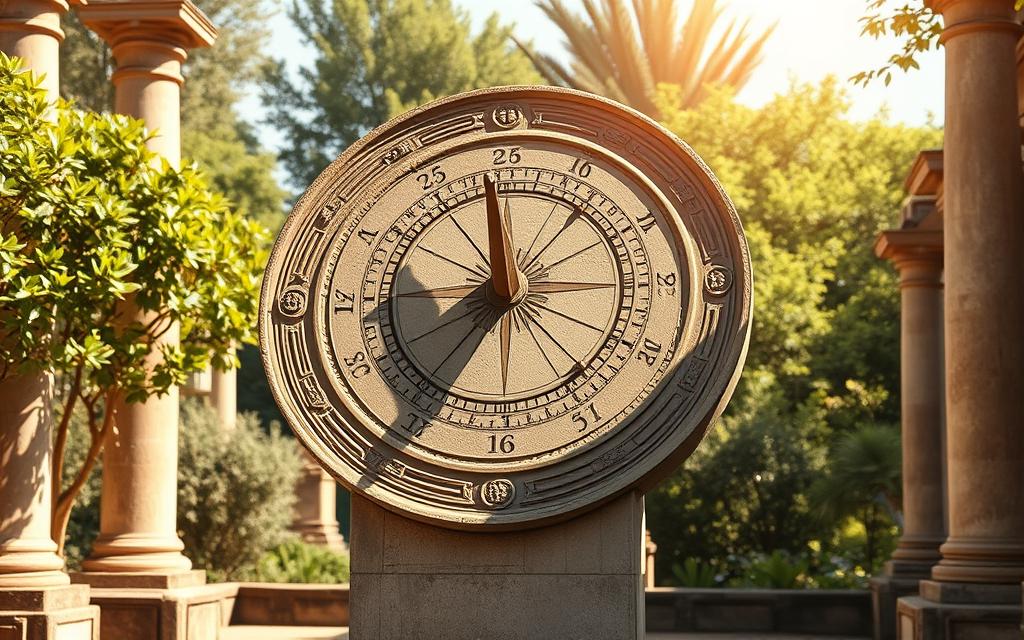
Greek and Roman mathematicians made sundial technology even better. They used math to make dials that worked all year, not just in summer.
“The sundial shows the time more truly than any clock”
Water Clocks and Hourglasses: Measuring Time Through Flow
Water clocks, or clepsydras, were a big step forward in ancient timekeeping. They measured time by how fast water flowed. This worked even when it was dark or rainy.
Water clocks were first used in Egypt during Amenhotep III’s time. In China, they used mercury instead of water to stop it from freezing.
In medieval Europe, hourglasses became popular. They were great for sailors because they showed time by how fast sand flowed.
| Device Type | Earliest Evidence | Primary Mechanism | Key Advancement |
|---|---|---|---|
| Obelisk Sundials | 1500 BC Egypt | Shadow tracking | First stationary time markers |
| Water Clocks | 1400 BC Egypt | Regulated flow | Night-time timekeeping |
| Hourglasses | 8th Century Europe | Sand flow | Maritime navigation |
These early tools set the stage for timekeeping for centuries to come. They show our endless quest to understand and control time through technology.
Mechanical Marvels: The Birth of Clockwork Technology
The mechanical clock’s invention was a big leap in timekeeping. It moved us from relying on nature to using precise machines. This change made timekeeping more accurate and set the stage for future advancements.
Medieval Tower Clocks: Engineering Time on a Grand Scale
In medieval Europe, clockwork technology reached new heights with the tower clocks. These massive clocks were a sign of medieval timekeeping skill. They were often in church towers and public places, helping to keep everyone in sync.
The 1360 clock by Henry de Vick of Paris set the standard for 300 years. It used a weight-driven mechanism to keep time accurately. This was a big step forward in mechanical clocks.
Building these clocks needed a lot of skill and knowledge. They showed how mechanical innovation could use natural forces in clever ways.
The Spring-Driven Mechanism: Revolutionising Portability
In the early 15th century, the mainspring changed timekeeping forever. It let clocks work without weights, making them more portable.
The spring mechanism made it possible to create smaller, portable clocks. This led to the development of pocket watches and wristwatches.
This spring mechanism was a major breakthrough in clockwork technology. It allowed clocks to go with their owners, making timekeeping personal.
The need for precise springs pushed the limits of metalwork and craftsmanship. This period laid the groundwork for mechanical timekeeping for centuries.
The Pocket Watch Era: Personal Timekeeping Becomes Practical
Over the centuries, clockmaking evolved, changing how we see time. Portable timekeeping devices became a big step forward. They moved time from public spaces to personal use.
These devices let people control their time like never before. They were a key part of technological progress.
17th-Century Innovations: Balance Springs and Improved Accuracy
The 17th century saw big changes in pocket watches. Christiaan Huygens introduced the balance spring in 1675. This was a huge leap in timekeeping.
This spring worked with the balance wheel to keep time accurately. It made watches much more precise, cutting down errors from hours to minutes.
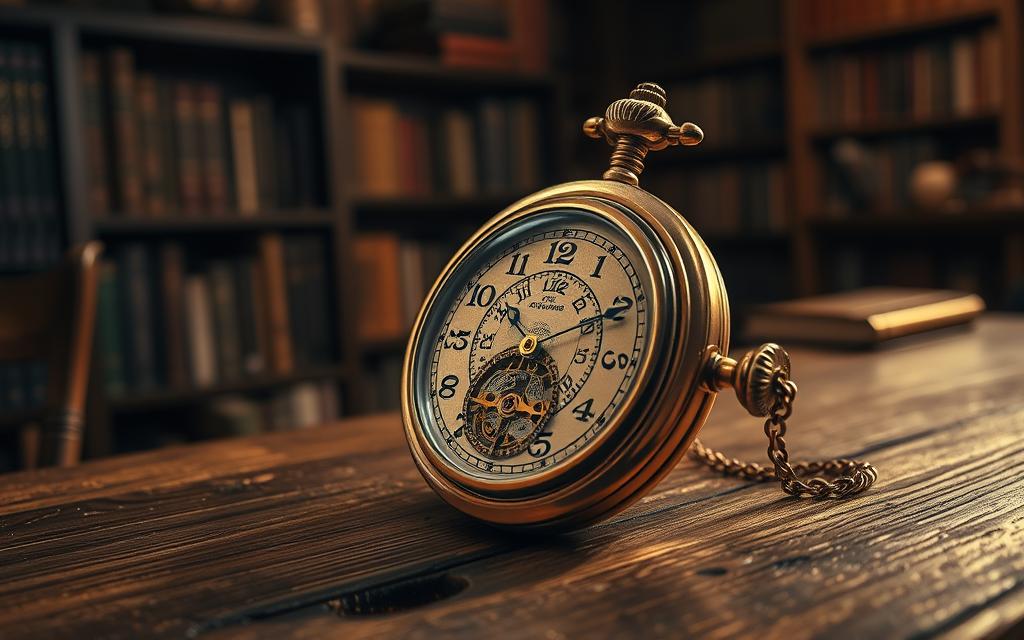
Other geniuses also made important contributions. Thomas Tompion created the cylinder escapement. Pierre Le Roy made balance wheels that worked well in different temperatures.
Nicolas Fatio de Duilier added jewel bearings in 1702. These tiny rubies and sapphires cut down on friction. This made watches more precise and last longer.
Mass Production: Democratising Time Technology
The 17th century’s tech advances led to mass production of watches. Watch mass production made these devices affordable for more people. They went from luxury items to everyday tools.
American makers were at the forefront of this change. Companies like Waltham Watch Company used new methods. These methods cut costs without losing quality.
This new way of making watches brought many benefits:
- Standard parts made repairs easier
- Lower costs made watches more accessible
- More reliable watches were made
- Quality was consistent
Time technology became more democratic. This meant more people could afford watches. Punctuality became a social norm, changing how we organise our lives.
For more on this era, check out our pocket watch history resource. It offers deeper insights into these groundbreaking developments.
| Innovation | Inventor | Year | Impact on Accuracy |
|---|---|---|---|
| Balance Spring | Christiaan Huygens | 1675 | Reduced error from hours to minutes daily |
| Cylinder Escapement | Thomas Tompion | 1695 | Improved reliability and reduced size |
| Temperature Compensation | Pierre Le Roy | 1766 | Maintained accuracy in varying temperatures |
| Jewel Bearings | Nicolas Fatio de Duilier | 1702 | Reduced friction, enhanced longevity |
Despite these improvements, early pocket watches were fragile. They could easily get damaged. It took more tech to make watches strong enough for daily use.
The pocket watch era laid the groundwork for personal timekeeping. It paved the way for wristwatches and today’s smart devices. This period was a key link between public clocks and personal timekeeping.
Wristwatches: Technology Meets Fashion and Function
Watches moved from pockets to wrists, blending tech and design. This change was more than a style shift. It changed how we deal with time every day.
Military Origins: Practical Timekeeping in Combat
Wristwatches became key in the Boer War and World War I. They were better than pocket watches for soldiers. Early military timepieces had special features for the battlefield:
- Luminous dials for nighttime visibility
- Shrapnel guards to protect the crystal
- Sturdy cases resistant to mud and moisture
- Large, legible numerals for quick reading
These “trench watches” were vital for military coordination. They showed how wristwatch technology evolved from fashion to function.
Automatic Movements: The Self-Winding Technological Leap
Automatic movements were a big step in wristwatch tech. This self-winding mechanism made watches easier and more reliable. They didn’t need daily winding because they used wrist movement.
Early automatics had a weight that moved with the arm. This energy wound the watch all day. It solved the problem of watches stopping if not wound.
By the 20th century, automatic movements became the norm. This showed how tech could fit into our lives, not the other way around.
Today, automatic watches keep going for days without needing to be worn. This is a big win for making timekeeping easy and accurate.
The Quartz Revolution: Electronic Timekeeping Dominates
Electronic timekeeping took over thanks to quartz technology in the late 1960s. This was a big change in watchmaking, moving from mechanical to electronic accuracy. It started with a simple idea that changed the whole industry.
Crystal Oscillator Technology: Unprecedented Accuracy
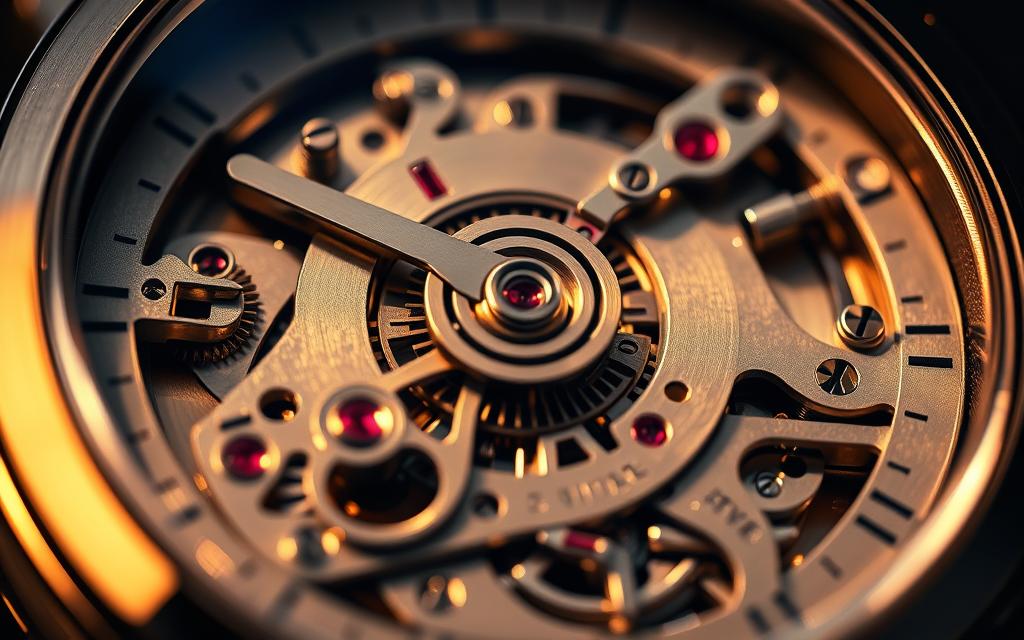
Crystal oscillators are at the core of quartz timekeeping. An electrical current makes a quartz crystal vibrate at 32,768 times per second. This makes it much more accurate than mechanical watches.
This technology uses electronic frequency for timekeeping, unlike mechanical watches. It’s so accurate, it’s only off by seconds each month. This made old timekeeping methods seem outdated.
Seiko’s 1969 Astron watch was the first to use this technology for watches. It showed how crystal oscillators could change timekeeping. Its accuracy and price made it a hit, starting a new era.
Digital Displays: LCD and LED Transform Time Reading
The quartz revolution also brought electronic displays. Digital watches used LCD and LED to change how we see time. They made reading time easier without moving hands.
LCD displays were great for everyday use because they used little power. They worked well in different lights. This made reading time clear and easy.
LED displays were bright but needed a button to save power. Their red numbers became symbols of the electronic age. Both LCD and LED added features like calendars and alarms that mechanical watches couldn’t have.
Quartz movements and digital displays made watches very accurate and useful. This change made watches more popular and practical for many people. The old watch industry had to adapt to these new technologies.
The quartz crisis of the 1970s showed how big a change this was. Swiss mechanical watch makers lost a lot of market share. People wanted affordable, accurate quartz watches instead. This made the whole industry rethink its technology and what people wanted.
Smartwatches: The Convergence of Multiple Technologies
In the 21st century, watches have changed a lot. They are now wearable computers that change how we use technology. This change is the biggest mix of different technologies in watch history.
Computer Integration: From Timekeeping to Multifunction Devices
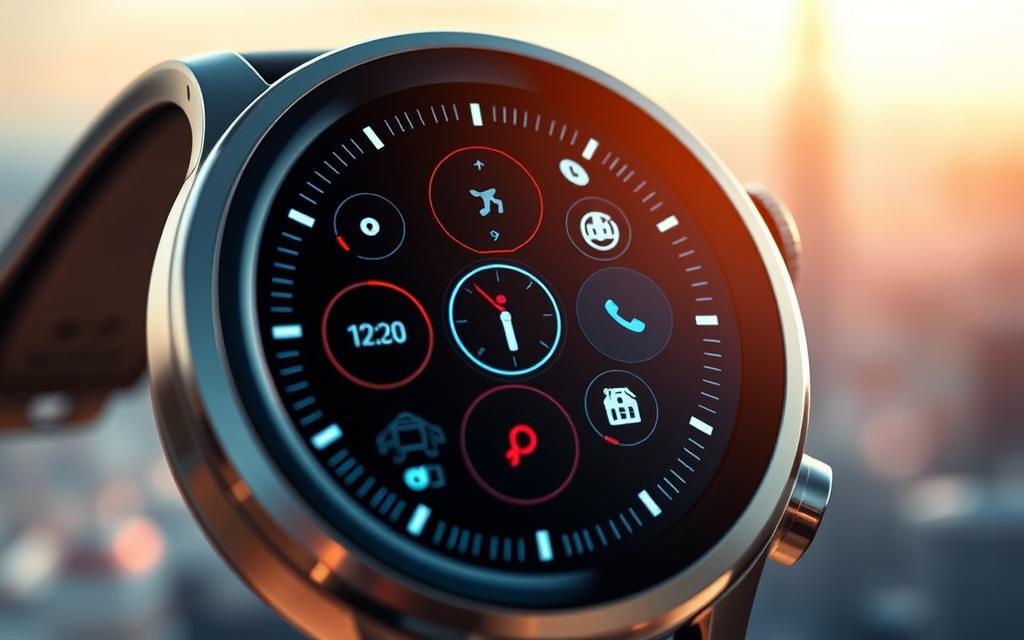
Computer technology has changed watches a lot. Now, smartwatch technology has powerful processors and apps. These watches can do many things.
Some key features include:
- Full operating systems for complex apps
- Touchscreen interfaces for easy controls
- Voice recognition and digital assistants
- Mobile payments with NFC
- Thousands of apps in app stores
The Apple Watch in 2015 was a big change. It showed how watches could do new things. Watchmakers like TAG Heuer now mix luxury with digital features in their connected timepieces.
Connectivity and Sensors: Health Monitoring and Beyond
Connectivity is key in smartwatch technology. They use Bluetooth, Wi-Fi, and cellular to stay connected.
This lets them:
- Send and receive messages
- Access the internet for info
- Use GPS for navigation
- Control devices remotely
Sensors for health monitoring are a big step forward. They track:
- Heart rate and variability
- Blood oxygen levels
- ECG for heart health
- Sleep and activity levels
These health monitoring features make smartwatches great for health. They collect data that helps with wellness and health prevention.
These wearable computers are getting better. They will soon have even more advanced sensors and AI. This will lead to more detailed health monitoring and better integration with our digital lives.
Today, connected timepieces are the top of watch technology. They mix old watch skills with new tech, health science, and connectivity.
Conclusion
The journey from ancient sundials to modern smartwatches is truly remarkable. It shows a horological evolution that spans thousands of years. Each step brought new ways to measure and interact with time.
This journey shows our endless drive for better timekeeping. It’s about making timepieces more precise and portable.
Mechanical watches are seen as luxury items, even with all the new tech. Their beauty and skill have been recognised by UNESCO. Brands like Patek Philippe and Rolex keep making these mechanical wonders.
They mix art with engineering in their watches.
The future of watch technology looks bright. Smartwatches from Apple and Samsung offer advanced health tracking. Traditional watchmakers are using new materials like ceramics and carbon composites.
They’re also making their watches more energy-efficient. This is true for both mechanical and electronic watches.
Watches are the pinnacle of technology. They show years of work in making things smaller, more precise, and digital. These devices keep getting better while staying true to their history.
FAQ
What is the earliest known form of timekeeping technology?
Sundials and shadow clocks were the first timekeeping tools. Ancient Egyptians used them around 1500 BC. These devices tracked time by following the sun’s movement.
How did mechanical clocks first emerge in history?
Mechanical clocks started in medieval Europe. They were powered by weights and used verge and foliot systems. Henry de Vick’s clock from 1360 was a big achievement, seen in public places.
What technological innovation made portable timepieces possible?
The mainspring’s invention in the early 15th century changed timekeeping. It allowed for smaller, portable clocks and watches. This made timekeeping personal and portable.
How did pocket watches improve in accuracy over time?
Pocket watches got more accurate thanks to new inventions. Christiaan Huygens’ balance spring and Thomas Tompion’s cylinder escapement helped. Jewel bearings by Nicolas Fatio de Duilier in 1702 also improved them.
Why did wristwatches become essential military equipment?
Wristwatches became key in the Boer War and World War I. They had special features like luminous dials and strong cases. These helped soldiers stay coordinated and on time.
What is the significance of the quartz revolution in watchmaking?
Seiko’s 1969 Astron started the quartz revolution. It used quartz crystal technology for better accuracy. This change affected the Swiss watch industry and made precise timekeeping more accessible.
How do smartwatches integrate technology beyond timekeeping?
Smartwatches, like the Apple Watch, do more than tell time. They have Bluetooth, Wi-Fi, and sensors for health. They track heart rate, blood oxygen, and ECG, making them tools for communication and health.
Are mechanical watches, despite technological advancements, relevant today?
Yes, mechanical watches are valued for their craftsmanship. They are seen as luxury items and symbols of engineering skill. UNESCO recognises their cultural importance, alongside modern quartz and smartwatch technologies.
What role did water clocks play in ancient timekeeping?
Water clocks, or clepsydras, were a big step in timekeeping. They measured time without sunlight. Ancient Egypt and China made advanced designs, like those during Amenhotep III’s reign and using mercury to prevent freezing.
How have materials science and energy efficiency evolved in modern watches?
Modern watches use new materials like carbon composites and ceramics. They also focus on energy efficiency, helping smartwatches and quartz watches last longer. These changes improve performance and add new features.