

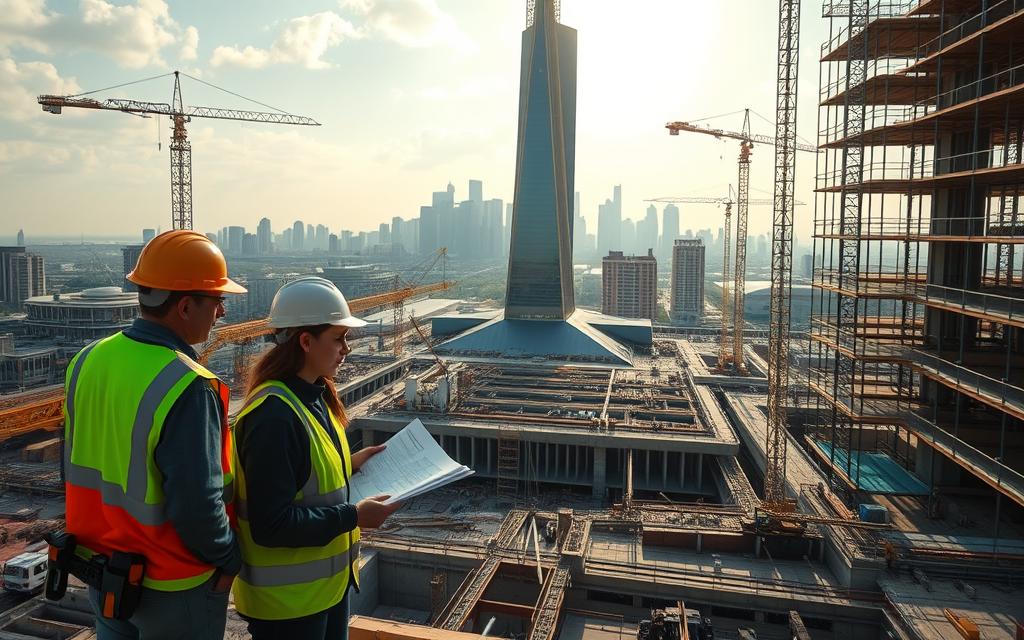
The modern building sector is under huge pressure for quality, speed, and efficiency. Clients want more advanced structures delivered quickly. This need for fast, high-quality work drives the use of new technologies and management strategies.
This field combines the latest tools with organisational skills. It helps manage resources well and makes operations smoother. Whether it’s a small home or a big industrial site, this method leads to better results.
The construction industry is changing fast, thanks to technology and better planning. New project management methods use digital tools to improve every part of building work. This mix of tech and planning leads to smarter, greener building practices.
Using these new ideas changes how we plan and build projects. It’s about making our built world better, with a focus on being efficient, safe, and delivering top results. It’s all about using smart systems and processes.
Defining Construction Technology and Management
Construction technology and management blend new tools with smart planning. This mix ensures buildings are made with the latest methods. They are also finished on time, within budget, and to top quality.
The Core Concept
Construction technology includes the tools, software, and machinery used in building. This ranges from excavators and cranes to advanced project management systems.
Construction management, as the Construction Management Association of America (CMAA) defines it, helps owners manage a project’s details. It covers programme, cost, quality, safety, scope, and function. It’s the strategic part that plans, coordinates, and controls a project from start to finish.
The connection between these two is key. BIM technology lets managers create detailed digital models. Drones in construction give precise survey data. Managers use this info to make smart choices, use resources well, and avoid risks.
Related Posts:
- How Technology Can Increase or Decrease Environmental Impact

- How Technology Affects the Labor Market Automation…

- How Technology Affects Ethics New Moral Dilemmas in…

- What Would Happen If Technology Didn't Exist A World…

- How to Survive Without Technology A Guide to Unplugging

- Is a Watch a Technology The Evolution of Timekeeping

Historical Evolution
The industry started with manual labour and simple methods. Projects were managed by experience and basic planning, often causing delays and extra costs.
The 20th century brought mechanical equipment, making work easier and more efficient. But, management was mostly done the old way, using paper blueprints and manual schedules.
The digital era changed everything. The first step was computer-aided design (CAD). But the real change came with digital tools and data-driven processes.
Now, the field is all about using digital tools and data. Modern projects need advanced solutions. We’ve moved from manual methods to automation, real-time data, and connected sites.
Key Technologies Shaping Modern Construction
The construction industry is changing fast, thanks to new technologies. These innovations are changing how we design, plan, and build projects. They’re not just improving old ways but also creating new ones.
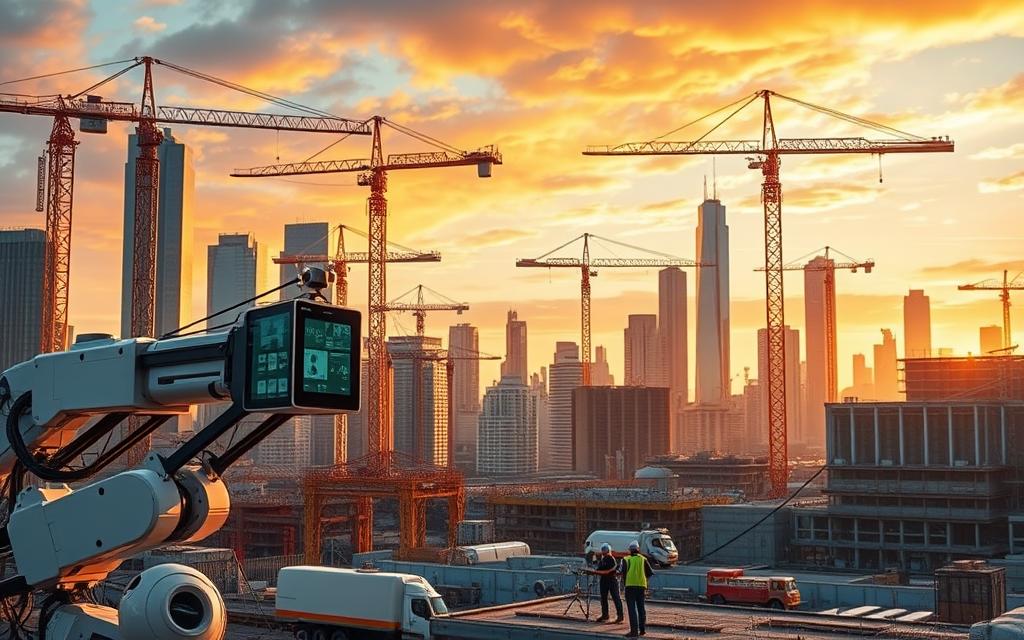
Building Information Modelling (BIM)
Building Information Modelling is a big step up from old CAD systems. It creates smart 3D models with lots of data about a building.
This tech lets architects, engineers, and builders work together in real time. The digital models help with:
- Finding clashes before construction starts
- Getting accurate material lists
- Showing what the finished project will look like
- Planning for maintenance later on
Using BIM cuts down on mistakes and saves time and money.
Drones and Surveying Technologies
Drones are now key on construction sites. They give views from the air that were hard or expensive to get before.
Surveying drones with cameras and LiDAR tech can get site data fast. They make detailed maps and 3D models for:
- Planning the site
- Tracking progress
- Checking hard-to-reach areas
- Measuring stockpiles
This data helps managers make better decisions and keep accurate records.
Prefabrication and Modular Construction
Prefabrication is a big change in building methods. It means making parts of buildings in factories and then putting them together on site.
New prefabrication uses automation and 3D printing for better parts. The benefits include:
- Building faster with parts made at the same time
- Better quality control in factories
- Less delay from weather
- Less waste and better for the environment
Prefabrication is really helping with complex projects. Modular construction goes further by making whole room modules or sections that just fit together on site.
This shows how smart prefabrication can change how we build. It brings big efficiency gains and keeps quality high.
Essential Management Practices in Construction
Construction management is all about planning, controlling finances, and managing risks. These key areas help projects run smoothly from start to finish. They ensure the project stays on track, within budget, and on time.
Project Planning and Scheduling
Good project planning is the base of all construction work. It includes making detailed plans, setting up timelines, and deciding how tasks will be done. The Critical Path Method helps find the most important tasks that affect the project’s time.
Effective scheduling looks at how tasks depend on each other and uses resources well. Managers use special software to make clear timelines for everyone. They also check and adjust the schedule when needed to keep the project moving.
Cost Estimation and Control
Getting the cost right starts early and goes on throughout the project. It involves predicting costs for materials, labour, equipment, and more. New methods use past data and smart analytics to improve accuracy.
Keeping an eye on spending is key to managing costs. Regular reports help spot any issues early. This careful money management stops projects from going over budget and keeps them viable.
Effective cost control includes:
- Detailed budget breakdowns by work packages
- Regular cost performance measurements
- Change order management procedures
- Value engineering opportunities identification
Risk Management Strategies
Good risk management finds and deals with problems before they happen. It looks at all parts of the project for risks. Managers check for safety issues, supply chain problems, weather, and changes in rules.
To manage risks, teams create backup plans. This might mean finding new suppliers, having extra time, or getting insurance. Regular meetings keep everyone updated on risks as the project goes on.
The table below shows common construction risks and how to manage them:
| Risk Category | Potential Impact | Management Strategy | Implementation Timeline |
|---|---|---|---|
| Safety Hazards | Workplace injuries, project delays | Comprehensive safety training and protocols | Pre-construction and ongoing |
| Supply Chain Disruptions | Material shortages, cost increases | Multiple supplier relationships, inventory buffers | Planning phase and throughout project |
| Weather Conditions | Work stoppages, schedule delays | Weather contingency planning, flexible scheduling | Pre-construction and seasonal adjustments |
| Regulatory Changes | Compliance issues, permit delays | Regular regulatory monitoring, legal consultation | Continuous throughout project lifecycle |
Using these management practices together makes a strong plan for success in construction. The mix of careful planning, money management, and risk handling helps projects face challenges well. This approach makes construction management stand out from just doing the job.
Benefits of Integrating Technology and Management
When construction technology and management come together, they bring big benefits to building projects. This mix changes how projects are done, making them better in many ways.
Enhanced Efficiency and Productivity
Modern construction tech makes work flow better. Automated systems and quick data analysis speed up tasks and cut down on mistakes.
Project management software helps teams work together smoothly. It cuts down on delays and keeps workers productive, even when there’s a shortage.
Artificial intelligence is key in making things run smoothly. AI looks at project data to find problems and suggest fixes.
Improved Safety Standards
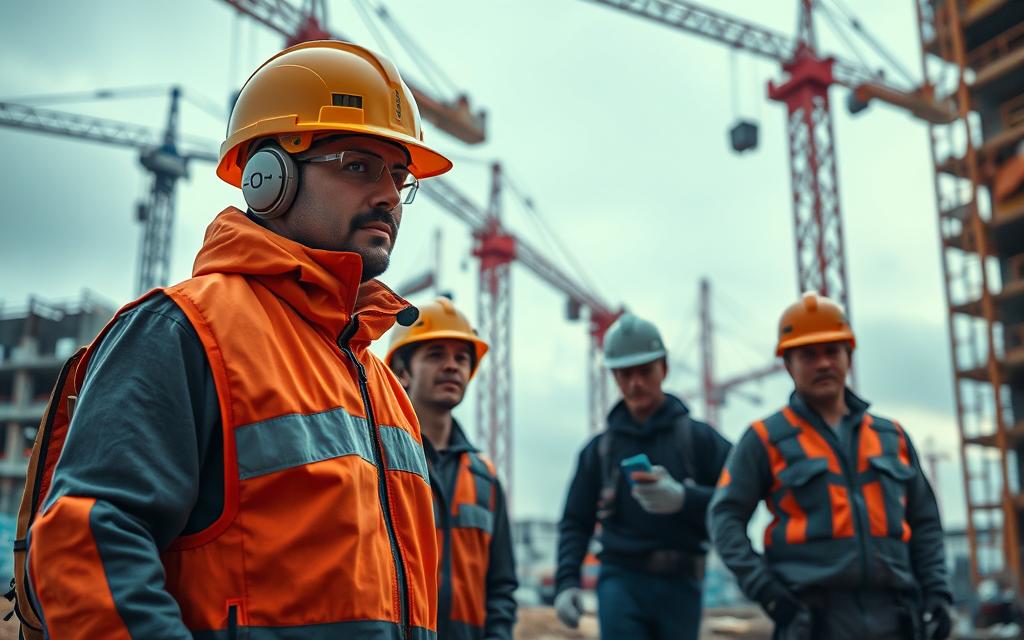
Technology brings big safety wins to construction sites. Drones do risky jobs without putting people in danger.
AI systems watch for safety issues as they happen. They tell supervisors right away if someone is in danger or not wearing safety gear.
Wearable tech tracks important health signs and the environment. This stops accidents before they start.
Sustainability and Environmental Impact
The construction world is getting greener thanks to tech. Building Information Modelling (BIM) helps design buildings that use less energy.
Prefabrication cuts down on waste. Factories make parts with care, using up leftover materials.
It’s easier to find eco-friendly building materials now. These options are good for the planet and keep buildings strong.
Smart buildings use less energy over their whole life. This helps the planet and saves money for owners.
Challenges in Implementation
Modern construction technology brings many benefits, but it also comes with big challenges. The construction world is slow to change, which makes it hard to keep up with new tech. This creates big hurdles that need careful planning and strategy.
High Initial Costs and Investment
One big problem is the high cost of new tech. Companies have to pay for:
- Specialised software licenses and subscriptions
- Hardware infrastructure and equipment upgrades
- Implementation consultancy and technical support
- System integration with existing operations
This can be a big barrier for smaller firms with tight budgets. They worry about the risks and if they’ll see quick benefits.
Workforce Training and Adaptation
Changing the workforce is another big challenge. The industry needs people who can use new tech, not just manual skills.
Training must cover:
- Digital literacy for older staff
- Learning how to use new software
- Understanding data and analysis
- Keeping up with system updates
Older staff might resist new tech, seeing it as a threat. Changing this culture needs careful planning and leadership.
Regulatory and Compliance Hurdles
The construction world is full of rules and standards. New tech must meet:
- Building codes and safety standards
- Data protection and privacy laws
- Industry-specific rules
- Certification and approval processes
These rules vary by place and add complexity. Companies must find ways to follow these rules without clear examples.
Despite these challenges, many firms are finding ways to succeed. For more on how to tackle these issues, check out challenges and solutions in smart construction.
Success comes from understanding these challenges and planning well. Firms that tackle these issues early will stay ahead in a tech-driven world.
Future Trends in Construction Technology and Management
Looking ahead, new trends in construction technology are set to change the game. These innovations will merge digital and physical aspects of building projects. This will lead to a new way of doing things.
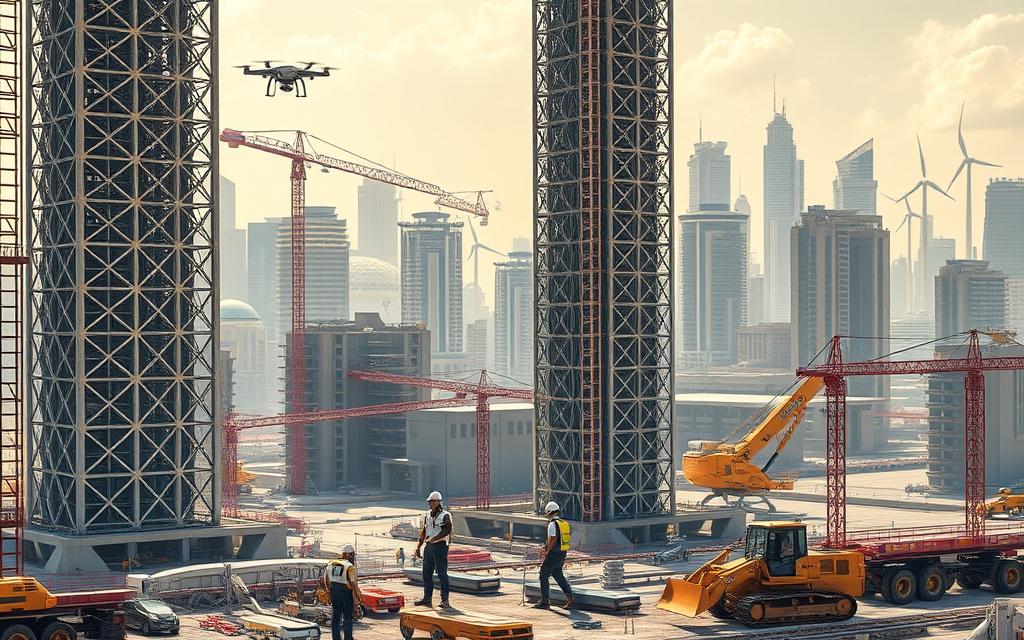
Advanced technologies aim to solve old problems and bring new chances for better efficiency, safety, and sustainability. Leaders in the field are investing in these future trends. They want to stay ahead and meet new client needs.
Artificial Intelligence and Machine Learning
Artificial intelligence is changing construction with smart analytics and decision-making. AI in construction helps with design and project tracking. It gives deep insights into building processes.
Machine learning looks at past projects to forecast delays, cost issues, and safety risks. These systems get better with more data. They offer reliable forecasts for project success.
“AI is a big change in construction methods. Its predictive power is changing how we manage risks and plan resources.”
AI is used for quality checks, supply chain management, and smart scheduling. It also spots safety risks early. This makes construction safer and more efficient.
Internet of Things (IoT) and Smart Sites
The Internet of Things links devices and sensors on construction sites. IoT turns sites into smart, responsive places. They can monitor themselves and adjust as needed.
Smart sensors track equipment, materials, and environmental conditions. They give real-time data. This helps managers make quick, informed decisions.
IoT sites offer many benefits:
- Real-time equipment monitoring and predictive maintenance
- Automated inventory management and material tracking
- Enhanced security through connected surveillance systems
- Environmental monitoring for compliance and sustainability
The data from IoT devices links with other systems. This creates digital twins of projects that update in real-time.
Robotics and Automation
Robotics in construction is moving beyond simple tasks. It’s now tackling complex, precise jobs. Autonomous equipment and robots are taking on new roles in construction.
Robots are laying bricks, grading land, and doing surveys. They reduce manual work, improve accuracy, and make sites safer.
The future of construction robotics includes robots working together on big projects. There will be 3D printing and exoskeletons that help humans. This will change construction forever.
| Technology Trend | Primary Applications | Key Benefits | Expected Adoption Timeline |
|---|---|---|---|
| AI & Machine Learning | Predictive analytics, design optimisation, risk assessment | Improved decision-making, cost reduction, enhanced safety | 2-5 years for widespread implementation |
| IoT & Smart Sites | Equipment monitoring, environmental sensing, inventory management | Real-time data access, automated processes, reduced downtime | Currently expanding, full integration in 3-7 years |
| Robotics & Automation | Prefabrication, site preparation, hazardous task execution | Labour efficiency, precision execution, safety enhancement | 5-10 years for complete adoption |
These new technologies work together, not alone. The biggest changes will come from combining AI, IoT, and robotics. This will change how we plan, execute, and manage construction projects.
Adapting to these changes requires more than just tech. It also needs a skilled workforce and new ways of working. Companies that adopt these future trends will thrive in a competitive, tech-driven market.
Conclusion
The construction industry is at a key moment. It’s being changed by new technology and better management. Tools like Building Information Modelling (BIM), automation, and robotics are making projects better. They improve efficiency, safety, and how we use resources.
Good management is key to using these new tools well. It helps solve problems like high costs and getting workers to adapt. A recent study on the industry’s tech shift shows it’s a must for growth.
To move forward, we need to keep investing in new ideas and training. By focusing on smart management and technology, the construction world can become stronger, more efficient, and greener for everyone.
FAQ
What is construction technology and management?
Construction technology and management use advanced tools and software. This includes BIM, drones, and prefabrication. It aims to improve efficiency, quality, and safety in projects. This is done by using new technology and good management.
How has construction technology evolved over time?
Construction has moved from manual work to digital tools and automation. It now uses systems like BIM, drone surveying, and modular construction. These changes help meet today’s demands for precision and efficiency.
What role does Building Information Modelling (BIM) play in construction?
BIM makes digital models for better planning and design. It helps in visualising and managing building processes. This reduces errors and improves coordination, leading to more efficient projects.
How are drones used in modern construction projects?
Drones do aerial surveys, monitor progress, and inspect hard-to-reach areas. They provide real-time data. This improves safety, reduces surveying time, and enhances decision-making.
What are the benefits of prefabrication and modular construction?
Prefabrication makes building components off-site and assembles them on-site. It speeds up construction, improves quality, and reduces waste. It also makes sites safer and more precise.
Why is project planning and scheduling critical in construction management?
Good planning and scheduling ensure projects are done on time and within budget. They involve making detailed timelines and allocating resources. This is key to avoiding delays and cost overruns.
How does cost estimation and control contribute to project success?
Accurate cost estimation sets realistic budgets. Ongoing financial oversight prevents overruns. It forecasts expenses, tracks spending, and controls costs to keep projects financially viable.
What are common risk management strategies in construction?
Risk management identifies threats like safety hazards and supply chain disruptions. It analyses their impact and implements mitigation measures. This includes contingency planning, insurance, and safety protocols.
How does technology integration improve construction efficiency and productivity?
Technology like automation and data analytics streamlines processes. It reduces manual effort and accelerates tasks. This leads to faster project completion and lower costs.
In what ways does technology enhance safety on construction sites?
Technologies like drones and AI monitoring identify hazards and monitor site conditions. They ensure compliance with safety standards. This reduces accidents and protects workers.
How does construction technology support sustainability and reduce environmental impact?
Technology promotes green building materials and energy-efficient designs. It also reduces waste through prefabrication. These practices lower carbon footprints and conserve resources.
What are the main challenges in implementing new construction technologies?
Challenges include high costs for software and training. There’s also a need for workforce upskilling. Navigating regulatory requirements is another hurdle.
How is artificial intelligence being used in construction technology and management?
AI and machine learning are used for predictive analytics and design optimisation. They automate scheduling and identify risks. This supports better decision-making and project management.
What is the Internet of Things (IoT) in the context of smart construction sites?
IoT connects sensors and devices for real-time data on equipment and site conditions. It enables proactive management and optimisation of construction operations.
How are robotics and automation shaping the future of construction?
Robotics and automation handle complex tasks like autonomous vehicles and 3D printing. They improve precision, speed, and safety. This is set to redefine construction methodologies and site operations.